You picked up a random web novel and now you cannot stop reading. The problem? You feel lost in a maze of realms, sect politics, and qi techniques that never stop expanding. This guide to cultivation: from servant to revered immortal clears that confusion so you can enjoy every chapter with full understanding and zero frustration.
What Is Cultivation: From Servant to Revered Immortal About?
Cultivation: from servant to revered immortal follows a young man trapped at the bottom of a brutal sect hierarchy. He cleans floors, endures beatings, and holds zero social standing. Everything changes when he awakens a hidden spiritual root that lets him absorb qi at an abnormal rate.
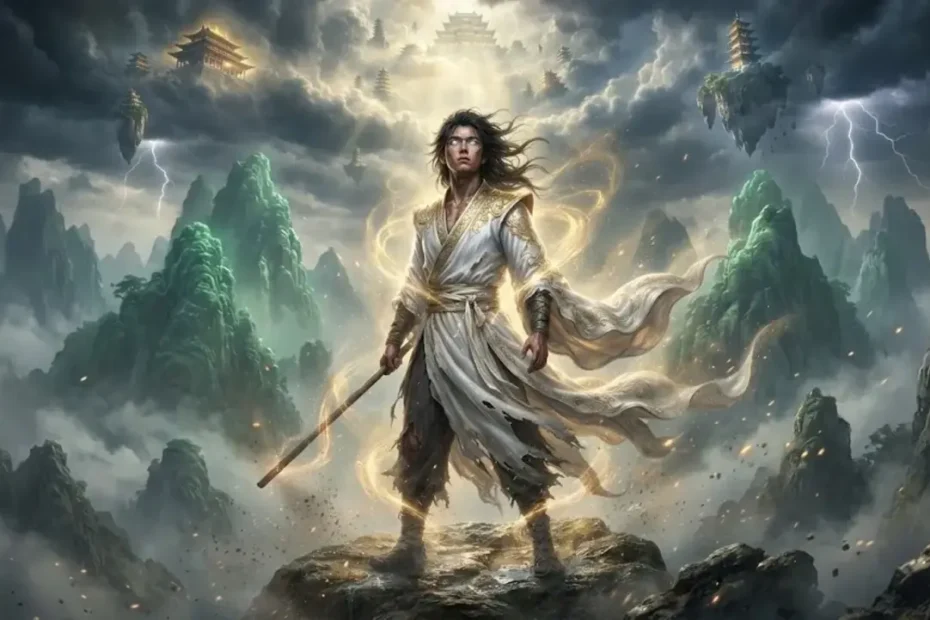
The story belongs to the xianxia genre, a branch of Chinese fantasy fiction centered on mortals training their bodies and spirits to achieve immortality. Think martial arts meets metaphysics. The protagonist climbs from absolute nobody to a being that commands the respect of entire celestial courts.
Readers first encountered this tale on platforms like Novel Updates, where translated Chinese web novels reach global audiences (source: novelupdates.com). The series quickly gained traction because it delivers fast-paced power progression without sacrificing emotional depth.
Who Is the Main Character in This Cultivation Story?
The lead character starts as a nameless servant boy assigned to menial labor inside a powerful cultivation sect. He has no family connections, no wealth, and no talent that anyone recognizes. This underdog setup hooks readers immediately because his victories feel earned rather than handed to him.
As the plot unfolds, he reveals a rare constitution that older cultivators once believed extinct. His personality balances sharp tactical thinking with genuine loyalty to the few people who treated him kindly during his servant years. He does not become arrogant after gaining power, which separates him from many xianxia protagonists.
How Does the Cultivation System Work in This Novel?
The power system in cultivation: from servant to revered immortal revolves around qi absorption, meridian opening, and spiritual comprehension. Characters pull ambient energy from heaven and earth, channel it through internal pathways, and condense it into a core inside their dantian.
Each breakthrough requires both raw energy accumulation and a moment of enlightenment. A cultivator might sit at the peak of a realm for decades until a single insight about the dao pushes them forward. This dual requirement keeps the system from feeling like a simple numbers game.
Combat involves qi-infused martial techniques, spiritual artifacts, and formation arrays. Higher-level fights shake mountains and split rivers, while early battles stay grounded and tactical.
What Are the Cultivation Realms From Servant to Immortal?
Understanding the realm progression helps you track exactly how far the protagonist has climbed. The table below outlines the major stages featured throughout the series.
| Realm | Description | Power Level |
| Qi Condensation | First stage where the body learns to hold spiritual energy | Can shatter boulders |
| Foundation Establishment | Builds a stable qi core inside the dantian | Flies short distances on swords |
| Core Formation | Compresses qi into a golden spiritual core | Levels small hills with attacks |
| Nascent Soul | Births a spiritual infant that can survive body death | Commands weather patterns |
| Spirit Severing | Cuts ties with mortal limitations and emotions | Bends space briefly |
| Dao Seeking | Actively searches for a personal universal law | Alters reality in small areas |
| Immortal Ascension | Sheds the mortal shell entirely | Becomes ageless and near-omnipotent |
Each realm contains sub-stages labeled early, middle, late, and peak. Breaking through a major realm often triggers a heavenly tribulation — a storm of divine lightning that tries to kill the cultivator for defying natural order.
Why Do Readers Love This Xianxia Progression Fantasy?
Fans gravitate toward cultivation: from servant to revered immortal because it nails the satisfaction curve. The protagonist faces real setbacks, loses fights, and earns every scrap of progress through cleverness and grit. You never feel like the author hands him free power-ups.
The pacing also stands out. Many xianxia novels drag through hundreds of repetitive tournament arcs. This story keeps the stakes fresh by shifting settings — from the servant quarters to outer sect grounds, inner sect palaces, and eventually celestial domains beyond the mortal plane.
Community discussions on Wuxiaworld forums frequently praise the novel for maintaining tension even after the protagonist reaches high realms (source: wuxiaworld.com). That consistency is rare in a genre known for power creep.
How Does the Servant-to-Immortal Trope Drive the Plot?
The servant origin creates a built-in revenge and redemption engine. Every elder who mocked the protagonist becomes a future confrontation. Every sect rule that oppressed him becomes a system he eventually dismantles or surpasses.
This trope also grounds the fantasy in relatable emotion. Most readers understand what it feels like to be underestimated. Watching someone rise from the lowest rung to the highest peak triggers a deep sense of justice and wish fulfillment.
The servant background gives the hero practical skills that noble-born cultivators lack. He knows how to endure pain, read people, and survive with almost nothing. These traits prove more valuable than raw talent during several critical story arcs.
What Makes the World-Building in This Story Stand Out?
The world operates on a layered cosmology. The mortal realm sits at the bottom, the spirit realm occupies the middle, and the immortal realm floats above both. Each layer has its own rules, resources, and political structures.
Sects function like corporations mixed with military academies. Outer disciples compete for scraps. Inner disciples enjoy luxury. Core disciples answer only to sect elders. The protagonist navigates this rigid ladder while secretly outpacing everyone above him.
Geography matters too. Ancient ruins hide forgotten techniques. Forbidden zones contain beasts that rival low-level immortals. Spirit veins beneath mountain ranges determine which sects control the most qi-rich territory.
Where Can You Read Cultivation: From Servant to Revered Immortal?
English readers can find translated chapters on several major web novel platforms. Novel Updates serves as the primary directory that links to fan translation groups working on the series (source: novelupdates.com).
MangaDex hosts the manhua adaptation for readers who prefer visual storytelling. The artwork captures the explosive combat scenes and sweeping immortal landscapes that text alone cannot fully convey.
Physical copies remain limited, but digital editions continue to expand as the series grows in popularity across Western markets.
How Does the Manhua Adaptation Compare to the Original Novel?
The manhua condenses long internal monologues into dynamic action panels. Fight scenes that span five novel chapters might resolve in two manhua episodes. This compression speeds up the pacing but occasionally trims character development.
Art quality improves noticeably after the first thirty chapters as the studio finds its rhythm. The depiction of qi techniques, heavenly tribulations, and immortal realms delivers genuine visual spectacle.
Purists often prefer the novel for its deeper exploration of dao philosophy and sect politics. Casual readers tend to enjoy the manhua as a faster, more accessible entry point into the story.
What Are the Major Story Arcs You Should Know?
The narrative divides into several distinct phases that mirror the protagonist’s rise through the realms.
- Servant Arc: The hero endures abuse, discovers his hidden spiritual root, and secretly begins qi training while performing daily chores.
- Outer Sect Arc: He enters formal competition, shocks senior disciples, and attracts both allies and dangerous enemies.
- Inner Sect Arc: Political conspiracies unfold as elders vie for control. The protagonist uncovers a conspiracy that threatens the entire sect.
- Wandering Cultivator Arc: Exiled or self-exiled, he explores the wider world, enters ancient ruins, and faces cultivators from rival factions.
- Heavenly Tribulation Arc: The first major realm breakthrough triggers a catastrophic lightning storm that draws attention from immortal-realm beings.
- Immortal Ascension Arc: The final chapters push beyond mortal limits into celestial warfare and cosmic-level threats.
How Does This Novel Compare to Other Cultivation Stories?
Compared to genre giants like A Will Eternal or Coiling Dragon, cultivation: from servant to revered immortal leans harder into the class-struggle angle. The servant origin gives the narrative a sharper social commentary edge that many xianxia stories gloss over.
The power system feels more structured than Martial God Asura but less rigidly mathematical than Reverend Insanity. This middle ground appeals to readers who want clear progression without spreadsheet-level complexity.
Pacing sits on the faster end of the spectrum. The author avoids the infamous “filler realm” problem where protagonists spend two hundred chapters in a single location doing repetitive tasks.
What Themes Make This Cultivation Tale Worth Reading?
Perseverance anchors the entire narrative. The protagonist faces circumstances that would break most people, yet he keeps moving forward one small step at a time. This message resonates across cultures and age groups.
Loyalty and betrayal weave through every major arc. Allies turn into enemies when power shifts. Former oppressors sometimes seek forgiveness. The story refuses to paint morality in simple black and white.
The pursuit of freedom drives the deepest thematic layer. Immortality in this world does not mean escaping responsibility. It means gaining the strength to protect the people and principles you value against forces that would crush them.
FAQs
Is cultivation: from servant to revered immortal finished?
The novel remains ongoing with new chapters releasing on a regular schedule. Translation groups typically lag a few dozen chapters behind the original Chinese release.
How many chapters does the story have?
The original Chinese version has surpassed 1,500 chapters. English translations cover a significant portion of that total and continue to grow each month.
What genre does this novel belong to?
It falls under xianxia, a subgenre of Chinese fantasy focused on spiritual cultivation, martial arts, and the pursuit of immortality through dao comprehension.
Is there an anime adaptation?
No official anime exists yet. The manhua adaptation currently serves as the primary visual version of the story and is available on MangaDex.
Who wrote the original novel?
The author publishes under a Chinese pen name common in web fiction circles. Translation platforms like Wuxiaworld and Novel Updates credit the original creator on their respective series pages.
Is this story suitable for beginners to xianxia?
Absolutely. The early chapters explain cultivation concepts clearly without assuming prior genre knowledge. New readers can jump in without feeling lost.
Start Your Own Cultivation Journey Today
Cultivation: from servant to revered immortal delivers everything that makes xianxia fiction addictive — relentless progression, vivid world-building, and a protagonist who earns every ounce of power through sweat and strategy. Whether you read the novel or the manhua, this story will pull you in from chapter one and refuse to let go.